The
product
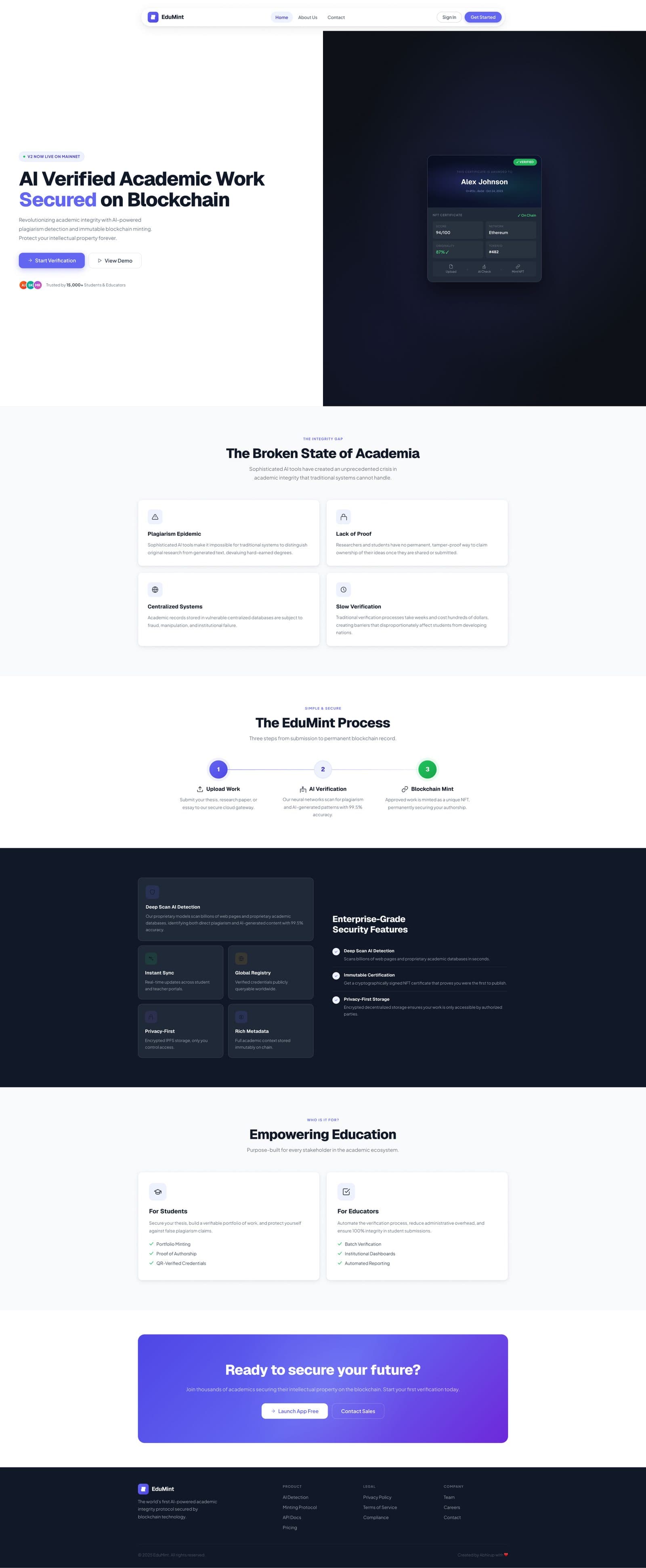
A hackathon-built academic integrity platform combining AI plagiarism detection with blockchain-based certification. A student uploads their thesis, research paper, or essay - EduMint's AI scans it for plagiarism and AI-generated content, and if the work is verified as original, it's minted as an NFT on the Ethereum blockchain, creating a permanent, tamper-proof proof of authorship. The platform serves two portals: one for students submitting and tracking their work, one for educators reviewing and verifying submissions.
The
challenge
Academic integrity is a contested space. After AI writing tools arrived, it became a crisis. Students with original work have no permanent way to prove they authored it. Educators can no longer distinguish human-authored work from generated text using traditional tools. Institutions hold credentials in centralized databases that are vulnerable to manipulation. International credential verification takes weeks and costs hundreds of dollars. EduMint was built at a hackathon to address all four simultaneously - AI detection for the integrity problem, blockchain minting for the ownership and fraud problem.
How it came together
Two portals, one product identity
The student and teacher experiences are genuinely different - different dashboards, workflows, information hierarchies. Rather than building two separate tools, EduMint unifies them under a single brand with a shared login that branches at authentication. The visual language stays consistent; only the functional layer changes.
Blockchain made non-intimidating
The NFT minting flow is the most technically complex part and the most likely to lose a non-technical user. The design breaks it into three clearly labeled steps - Upload, AI Check, Mint NFT - and uses familiar UI patterns (progress indicators, status cards, confirmations) so the process feels like filing a document, not interacting with a blockchain. Technical details (wallet address, gas fee, token ID, IPFS hash) are visible for users who want them but never in the critical path.
Originality score as the decision surface
The AI analysis report leads with a single large originality percentage - not a table, not a breakdown. The number is the decision. Everything else exists to explain and support it, not compete with it. Educators can act on the score in seconds; they can dig into detail when a case requires it.
Teacher dashboard built around action
The educator view leads with pending reviews - the count, the trend, the average originality score across submissions. Every row has a single primary action (Review or View Result). Open the dashboard, see what needs attention, act on it without hunting through menus.
What I shipped
The result
“The hardest part wasn't the blockchain - it was making sure students and educators, who care about completely different things, could share the same product without one feeling like an afterthought.”
What I'd push further
The current version handles individual submissions well. Institutions operate at scale - a batch verification flow for educators managing entire courses would significantly increase utility beyond individual use. That, paired with a public credential query page where anyone can verify a certificate using just a token ID, would complete the trust infrastructure EduMint is designed to build.