The
product
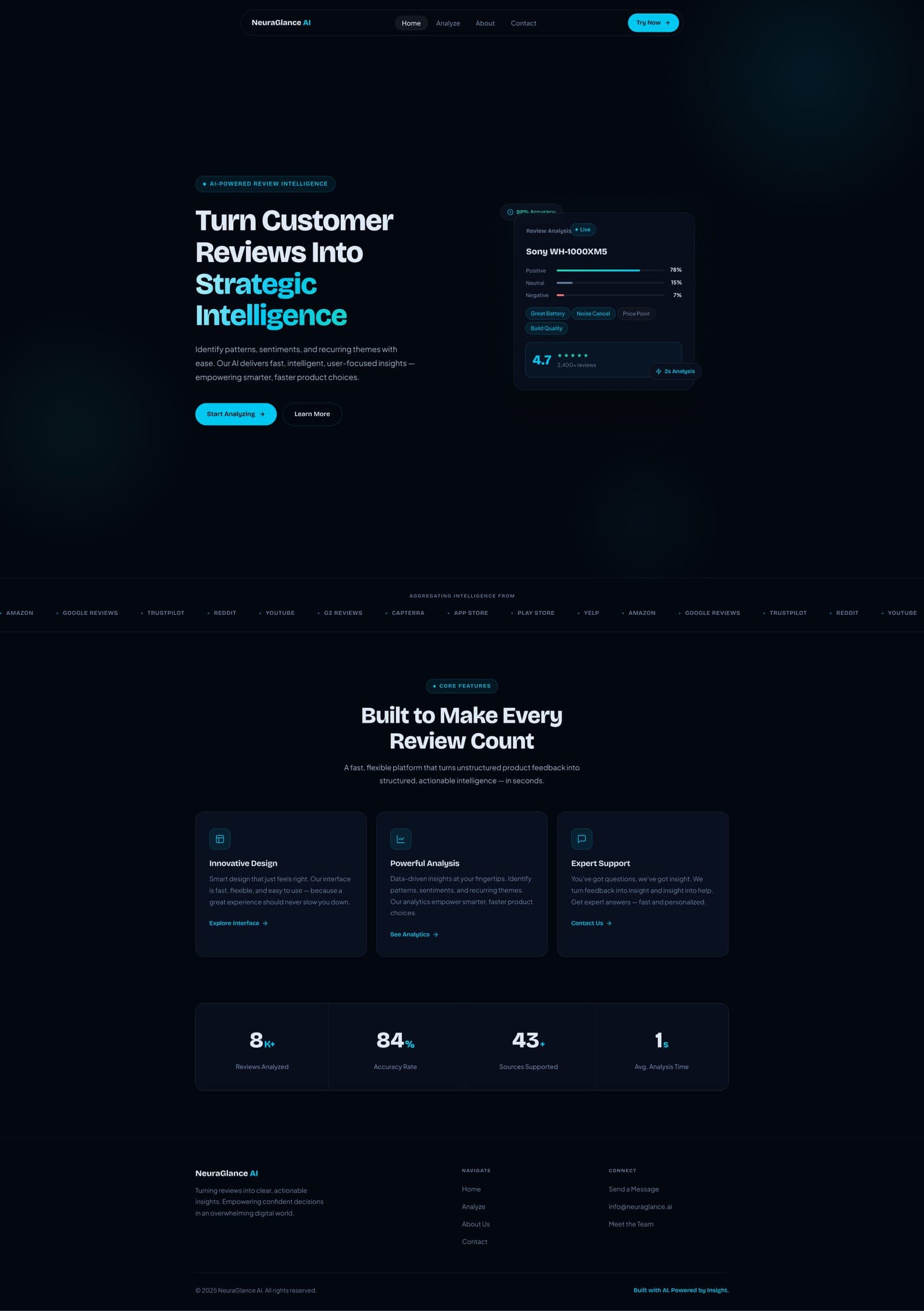
NeuraGlance AI is a hackathon-born product that turns the chaos of online reviews into structured, actionable intelligence. Enter a product name or URL - NeuraGlance pulls data from 50+ sources including Amazon, Trustpilot, Reddit, YouTube, G2, and the App Store, then delivers a sentiment breakdown, key theme extraction, and a confidence score in seconds. The goal: give every consumer the quality of insight that enterprise research teams rely on.
The
challenge
Buying something online in 2025 means drowning in reviews. A single product on Amazon can have 12,000 ratings. The same product on Reddit has a thread calling it overpriced. A YouTube reviewer loves it. Trustpilot says the company's customer service is terrible. None of this information talks to each other. The consumer is left doing manual cross-platform research before making a decision that might be wrong anyway. The problem isn't a lack of reviews. It's a lack of synthesis. NeuraGlance was built at a hackathon to answer a simple question: what if a single tool could read everything and tell you what actually matters?
How it came together
Confidence score as the hero metric
Most review tools show sentiment percentages. NeuraGlance leads with a confidence score - a single number derived from review volume, recency, and cross-platform consistency. Users don't want to interpret data, they want a verdict they can trust. The score gives them that without eliminating access to the underlying breakdown.
Source breadth as a trust signal
The scrolling ticker of review sources - Amazon, Trustpilot, Reddit, YouTube, G2, Capterra, App Store, Play Store, Yelp - isn't decoration. It's a credibility statement. Showing exactly where the data comes from addresses the user's core anxiety: is this just Amazon reviews repackaged? It isn't, and the UI makes that immediately clear.
Clean, clinical aesthetic
Dark navy header, clean white content areas, measured typography. A tool handling data users trust with purchase decisions can't feel playful or experimental. It has to feel like infrastructure.
Real-time analysis framing
The hero shows a live-style analysis card for the Sony WH-1000XM5 - specific product, specific numbers, specific themes. Showing a real, recognizable product in the demo immediately answers 'does this actually work?' without requiring the user to try it first.
What I shipped
The result
“Hackathons aren't about what you build - they're about what you cut. The Top 10 finish came from killing scope, not stretching effort.”
What I'd push further
The current version surfaces themes but doesn't let users filter by theme - seeing only the reviews that mention battery life, for example, would dramatically increase the tool's utility for research-heavy users. That's the next feature I'd prioritize, alongside persistent search history so users can track sentiment changes on a product over time.